Health education
Understanding high blood pressure
Why regular blood-pressure checks matter, common risk factors and when to seek urgent care.
Important: This article provides general health education. It is not a diagnosis, prescription or substitute for care from a qualified health professional.
Why blood pressure matters
Blood pressure is the force of blood against the walls of your blood vessels. A reading has two numbers: the top number is the pressure when the heart beats, and the bottom number is the pressure when the heart rests.
High blood pressure often causes no symptoms. Measuring it is the only reliable way to know whether it is raised.
Know the common risk factors
- Eating too much salt or foods high in saturated and trans fats
- Not getting enough physical activity
- Using tobacco or drinking alcohol harmfully
- Living with overweight or obesity
- A family history of high blood pressure, older age, diabetes or kidney disease
Practical next steps
- Have your blood pressure checked by a trained health worker.
- Keep a record of your readings and take it to your clinician.
- Do not start, stop or change blood-pressure medicine without professional advice.
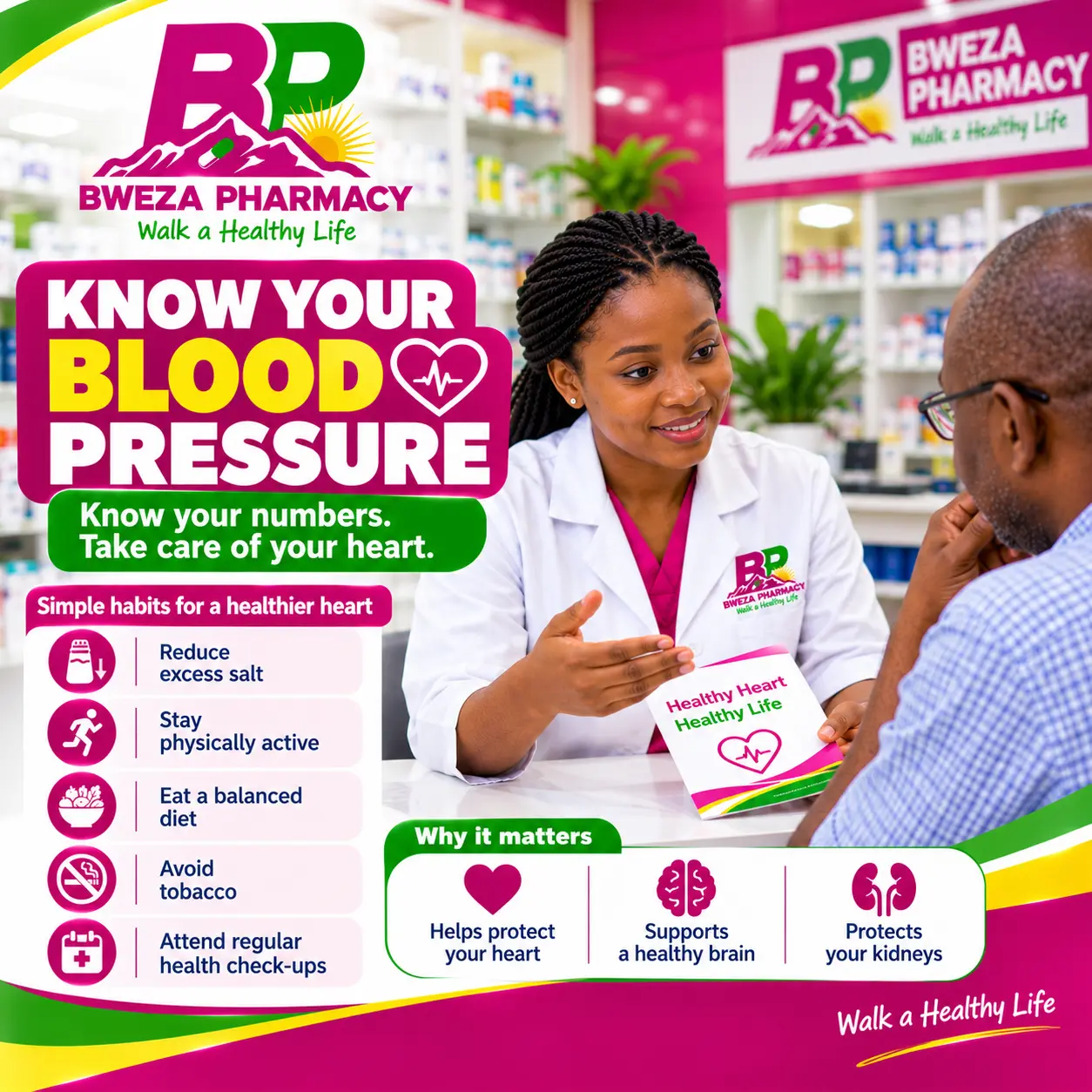
- Choose more fruit and vegetables, reduce salt, stay active and avoid tobacco.
When to get urgent help
Seek urgent medical care for chest pain, severe headache, blurred vision, confusion, breathing difficulty, weakness or numbness—especially with a very high blood-pressure reading.