Health education
Know your blood sugar and diabetes risk
A clear introduction to diabetes risk, possible warning signs and the value of timely testing.
Important: This article provides general health education. It is not a diagnosis, prescription or substitute for care from a qualified health professional.
What diabetes means
Diabetes is a long-term condition in which blood glucose is too high because the body does not make enough insulin, cannot use insulin effectively, or both.
Type 2 diabetes is the most common form. Symptoms can develop gradually, so testing matters when a health professional recommends it.
Possible warning signs
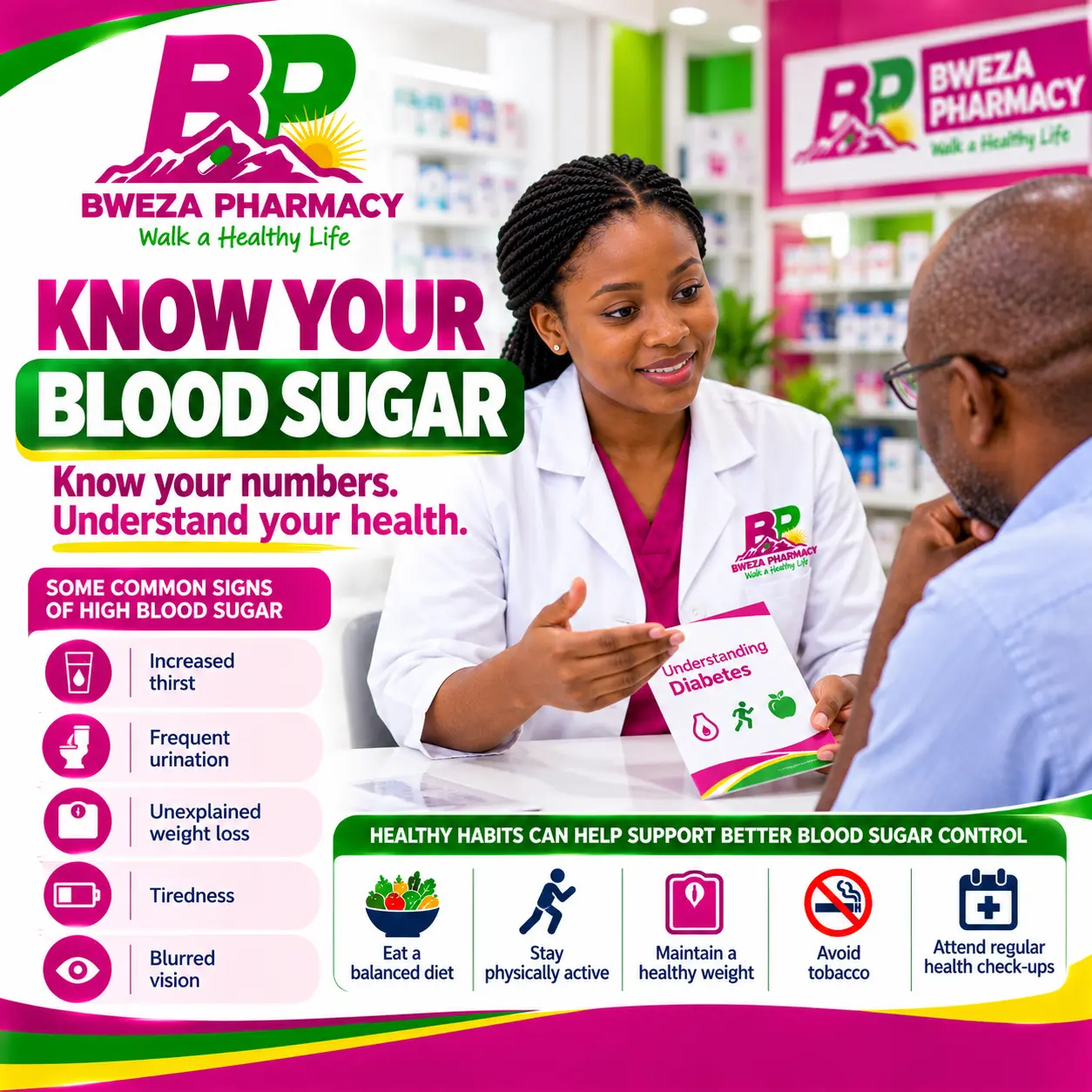
- Passing urine more often than usual
- Feeling unusually thirsty or tired
- Unexplained weight loss
- Blurred vision
- Slow-healing wounds or frequent infections
Who should discuss testing
Speak with a qualified health professional if you have symptoms or risk factors such as a family history of diabetes, overweight, high blood pressure, limited physical activity, previous gestational diabetes or a history of raised blood sugar.
Protect your long-term health
- Choose a balanced diet and limit highly processed foods and sugary drinks.
- Stay physically active in a way that is safe for you.
- Avoid tobacco and attend recommended health checks.
- If you already have diabetes, follow your treatment plan and keep scheduled reviews for your eyes, feet, kidneys and blood pressure.